
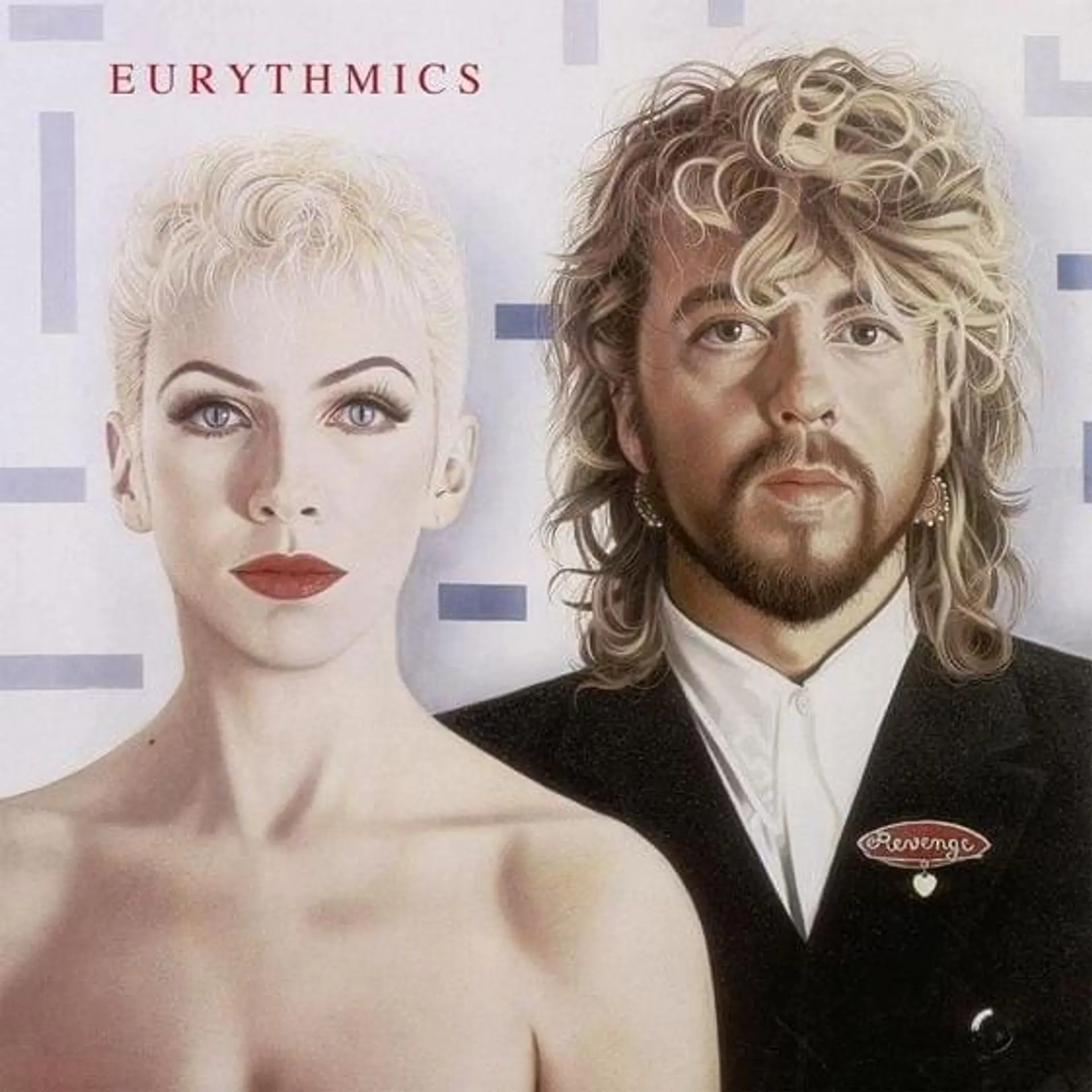
| Released | 30 June 1986 |
|---|---|
| Label | RCA Records |
| Genre | Pop rock |
| Duration | 43:44 |
A vaunted pleasure of the vinyl experience is the opportunity for earnest study of sleeve notes that immobile listening offers.
Combined with the larger canvas provided by LP sleeves for their supporting artwork and literature, poring over the packaging while the record plays is almost obligatory.
This compulsion was compounded in the original vinyl era by the relative unavailability of information on the artists behind your record collection.
As Claire Dederer[1] puts it:
Record albums and books appeared before us as if they had arrived after hurtling through space's black reaches, unmoored from all context.[2]
I tried to mitigate this situation with a subscription to Record Mirror that lasted through its transformation from an inky tabloid (like its music paper rivals, NME and Sounds) in the late 1970s and early 1980s to a glossy magazine in 1982.[3]
Despite the weekly press back-up, album sleeves remained the key texts for the avid listener.
I recall clutching covers almost every time I dusted down another disc and lowered the tonearm to it, but I can't have paid them the close attention I imagined — at least not in the case of Eurythmics' fifth album, Revenge.
I only learned in the wake of Blondie's drummer, Clem Burke's death on 6 April this year[4] that he played on Eurythmics' 1986 album.
And yet, he's listed among the musicians' credits printed in red below the lyrics of every song on the album's inner sleeve.
If this isn't acknowledgement enough, the makers of his kit also get credits: ‘clem burke plays “Premier Drums & Ziljan[5] Cymbals”’.
Having the gospel from its sleeve notes, I revisited Revenge to listen anew.
Burke also played on Eurythmics' debut album, In the Garden,[6] in 1981. Dave Stewart[7] recalls that he:
[…] asked Clem Burke to play with us again [on Revenge]. He is a fantastic rock'n'roll-pop-classic drummer, who is very dramatic. If you're building from a verse into a chorus, he really gives it stick, he doesn't hold back or try to be jazzy or too subtle. It's all about the fact that we are making pop and rock music, and we need to feel it. Take a song like Thorn in My Side, for example. Even with just me on a 12-string acoustic, Annie's voice, and Clem's drumming, we made the whole thing sound electrifying.[8]
Burke's robust style aligned with Stewart's vision for the album, which was recorded, like In the Garden, at Conny's Studio in Cologne, West Germany:
I went to that studio with a mission: to make a record that had an epic, arena-type sound to it, so we could really get our teeth into it when we played live. I started to play more guitar on this album, and it was made with a band feel, as opposed to the sound of a duo.[9]
Stewart and Lennox made Eurythmics' most striking evolution from the duo's earlier synth-pop sound with Be Yourself Tonight.[10] The previous album is more genre-bending than Revenge, which sticks to pop-rock in keeping with Stewart's arena-size ambitions. The more focused approach builds well on the progression of the 1985 release.
As Stewart recognises, Thorn in My Side is a strong track. Its spoken introduction ironically invokes those in 1960s girl-group songs, particularly those of The Shangri-Las.
It was Revenge's second UK single[11] and biggest hit here, peaking at number five in the Singles Chart following its release in August 1986.[12]
This album's standout track is less obvious than Be Yourself Tonight's. Lennox delivers Thorn in My Side with a conviction that may give it an edge over the other tracks, but it's a close-run thing.
When Tomorrow Comes was the LP's lead single in the UK,[13] released nearly a month ahead of the album. It's unclear why this track's chart performance was significantly weaker than Thorn in My Side, scoring a lowly number 30 top position.[14]
A slower song led by a guitar melody, its lyrics are more evocative than for Thorn…: ‘Underneath your dreamlit eyes / Shades of sleep have driven you away…’
The two songs are well sequenced as tracks two and three on Side One of Revenge. The first side also has the album's other two singles.
Missionary Man is the arena-rocking opener, complete with obligatory power chords.
It was the album's final UK release in February 1987,[15] and peaked at number 31 in the UK Singles Chart.[16]
Side One's final track is The Miracle of Love, a bittersweet ballad with soaring, string-laden instrumentation, which brings it gently to the dead wax.
It was the album's third single, issued in November 1986,[17] and reached number 23 in the charts.[18]
I bought Revenge soon after it was released, and having the album, its later singles were of only passing interest.
Checking the singles' chart positions for this post, I'm surprised they weren't bigger hits — my impression of their chart success exaggerated by their subsequent consistent appearance on best-of compilations and playlists.
The fact that all four singles from Revenge were drawn from Side One makes Side Two a more interesting listen in retrospect. The temptation to skip over all but the better-known material is more difficult on vinyl than its digital successors, but if the hits are all gathered on a single side… Side Two shows the relative strength of the songs not deemed worthy of single releases.
Let's Go!, as its title suggests, is one of those ‘let's just do it’ kind of pop-rock songs, and it serves as a suitably upbeat start to Side Two.
Take Your Pain Away marks a slight return to Eurythmics' earlier style, except that its bass and drums are not synthesised.
A Little of You is more melodious than its rhythmic predecessor, with lusher production including strings.
In This Town now fires synaptic connections with two songs released later in the decade. The repeated refrain of ‘Feels like Sunday every day’ naturally presages Morrissey's Everyday is Like Sunday, issued in 1988.[19] And the title is nearly the namesake of This Town, the opening track of Elvis Costello's 1989 album, Spike.[20] All three songs lament the status quo of life in their respective settings.
Revenge wraps up with the wistfully sentimental I Remember You, drawing the second side to a close in the pleasantly downbeat way that The Miracle of Love ends Side One.
While none of the tracks on Side Two were compelling enough to demand a single release, labelling them as filler would be unfair. This also goes for Side One's lone non-single, The Last Time, making it a strong album overall.
Revenge was one of the last records I bought during my original vinyl era — I got my first CD player in 1987. I listened to it a lot before going digital, but I never replaced it on CD, which was the acid test of whether an album was a perennial favourite.
I bought Eurythmics' next album, 1987's Savage, on CD,[21] but my musical attention was elsewhere when the duo released We Too Are One in 1989.[22] I was back on board for Peace, their reunion album in 1999.[23]
Revenge might not have remained in hard rotation with me beyond the mid-1980s, but returning to the record in recognition of the Blondie connection I originally missed in its sleeve notes revealed more and reminded me of its strengths.
Notes and references